
















































What is the difference between legal and illegal IPTV in the UK?
Legal and illegal IPTV in the UK
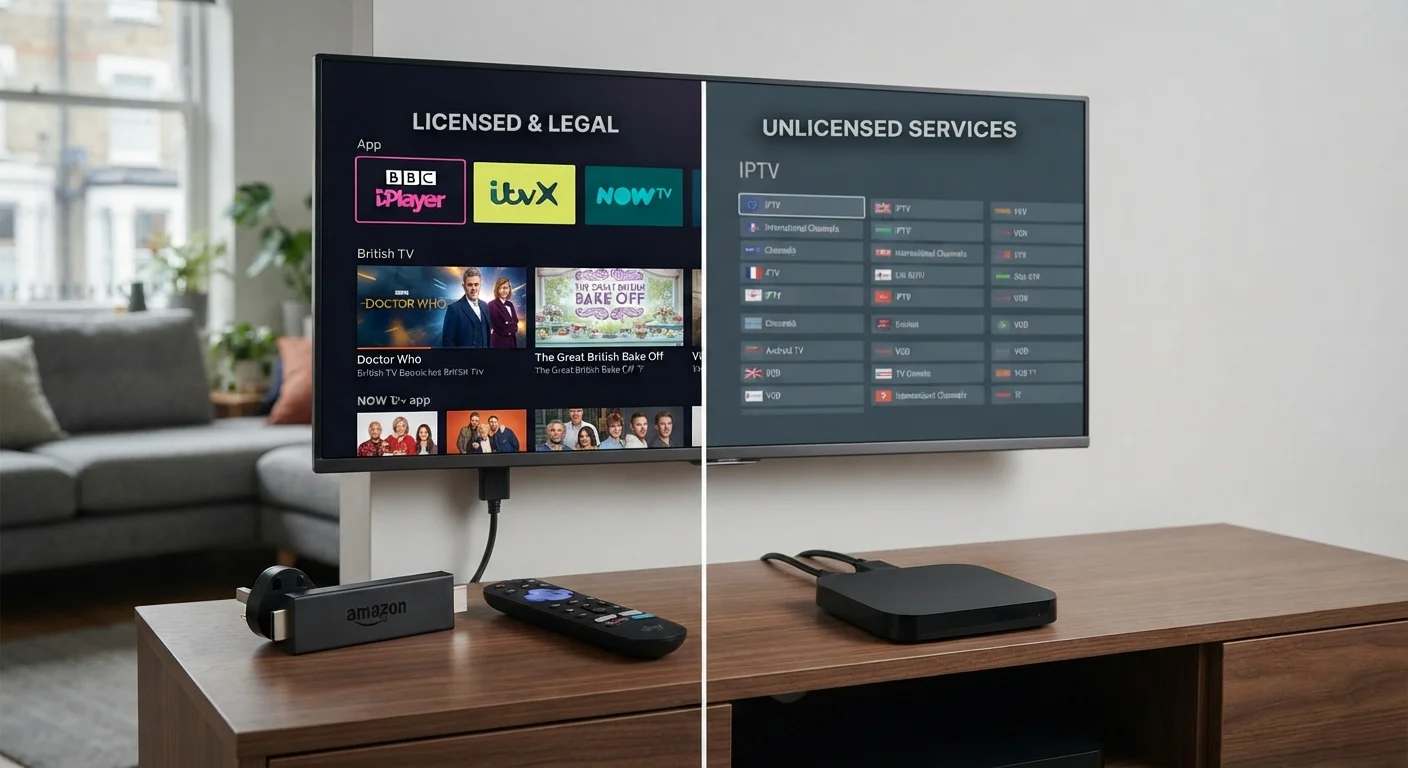
Legal and illegal IPTV in the UK – What most people call “online TV” is a moving target. In the UK, a legal IPTV service is backed by licences from broadcasters and the regulator, while an illegal one sidesteps those fees and often lands you in hot water. The difference isn’t just paperwork it decides whether you’ll enjoy crystal‑clear streams, reliable customer support, and protection under UK consumer law, or whether you’ll risk sudden blackouts, malware, and fines.
Table of Contents
Legal vs illegal IPTV in the UK – Quick Answer
A legal IPTV service holds the appropriate broadcast and copyright licences, pays royalties to content owners, and operates under Ofcom’s rules. An illegal IPTV service streams copyrighted channels without permission, evading fees and exposing users to legal and security risks.
Understanding IPTV: The Basics
Internet Protocol Television (IPTV) delivers television content through an internet connection rather than traditional satellite, cable, or terrestrial signals. The technology itself is neutral – it can be used by any provider that has the rights to the channels they distribute.
When you press play, the video is broken into small data packets, sent over your broadband, and reassembled on your device in real time. This allows on‑demand libraries, live TV, and time‑shifted playback that traditional broadcast can’t match.
In the UK, the legal framework for IPTV is anchored in three main pieces of legislation: the Copyright, Designs and Patents Act 1988, the Digital Economy Act 2017, and Ofcom’s Broadcasting Code. Any service that wants to sell or stream copyrighted TV must secure licences from the rights holders and register with Ofcom where required.
What Makes an IPTV Service Legal?
A legal IPTV service meets three core criteria:
1. Licensed Content – The provider has secured distribution rights from broadcasters, production companies, or collective rights organisations such as the Copyright Licensing Agency (CLA).
2. Regulatory Compliance – The service is either listed on Ofcom’s register of TV licence‑exempt services or holds a broadcast licence that covers internet delivery.
3. Transparent Business Model – Pricing, terms of service, and cancellation policies are clearly displayed, and the provider offers a legitimate customer support channel.
Because these requirements involve real money flowing to content creators, legal services can afford higher quality streams, reliable server infrastructure, and regular updates to channel line‑ups.
Examples of Legal IPTV Providers in the UK
- BBC iPlayer – Free, ad‑free streaming of BBC channels and on‑demand programmes, funded by the TV licence fee.
- ITV Hub / ITVX – Provides live ITV channels and a library of catch‑up shows, supported by advertising and a premium subscription tier.
- All‑4 (Channel 4) – Live streaming of Channel 4, E4, and More4, plus a sizable on‑demand catalogue.
- Sky Go / NOW TV – Part of the Sky Group, offering live satellite channels streamed over the internet with a full suite of sports, movies, and entertainment licences.
- Virgin Media TV – Bundles IPTV with broadband and phone services, delivering legally licensed channels through the Virgin Media platform.
These services are subject to Ofcom oversight, meaning they must meet standards for accessibility, advertising, and content warnings.
What Makes an IPTV Service Illegal?
An illegal IPTV service bypasses the licensing process entirely. It typically operates by:
- Acquiring streams from abroad where the provider does not have UK distribution rights, then rebroadcasting them to UK users without paying royalties.
- Using pirated satellite feeds that have been captured and re‑encoded for internet delivery.
- Offering “all‑in‑one” packages that bundle hundreds of premium channels (including premium sports, premium movie networks, and pay‑per‑view events) at a fraction of the market price, a clear sign of unauthorised distribution.
Because these services do not pay for the content, they have no legal obligation to maintain quality or protect users. The servers are often hosted in jurisdictions with lax enforcement, and the business model relies on anonymity and rapid turnover.
Legal Risks for Users
The UK courts have ruled that knowingly accessing unauthorised streams can constitute a breach of copyright infringement. While most prosecutions target the operators, users can receive cease‑and‑desist letters, be blocked by ISPs, or, in extreme cases, face civil damages. Moreover, illegal services are frequently taken down by law enforcement, leaving subscribers without access and potentially without a refund.
Security Risks
Illegal IPTV providers often bundle their streams with malicious software. Common threats include:
- Malware-laden apps that request unnecessary permissions on smart TVs or mobile devices.
- Phishing attempts via fake “account verification” emails.
- Data harvesting where the provider logs viewing habits and sells them to third parties.
Because there is no customer support, any technical issue usually ends in a dead end, forcing users to either switch providers or revert to traditional TV.
How to Spot a Legal IPTV Service
When you’re evaluating an IPTV offering, ask yourself the following checklist:
- Is the provider listed on Ofcom’s register? You can search Ofcom’s online database for the company name.
- Does the website display clear contact details, a physical address, and a Terms of Service page? Legitimate businesses rarely hide this information.
- Are the pricing and channel line‑up realistic? If a “premium sports pack” is offered for £5 per month, that’s a red flag.
- Is there a free trial that requires a credit‑card but no upfront payment? Legal services often offer a short trial period, but they will never ask for payment before you’ve accessed the service.
- Does the provider offer a help desk, live chat, or phone support? The presence of a responsive support channel is a strong indicator of legitimacy.
If any of these points raise doubts, lean toward a known legal alternative.
Common Pitfalls and How to Avoid Them
Even tech‑savvy users can slip into illegal IPTV traps. Here are the most frequent mistakes and practical ways to prevent them:
Pitfall: A pop‑up advert promises 200+ channels for £2.99.
Solution: Remember the rule of thumb – if the price is dramatically lower than comparable legal bundles, it’s almost certainly illegal.
Pitfall: A friend recommends a “secret” service that works on their smart TV.
Solution: Ask for the provider’s licence number and cross‑check it with Ofcom. Verify the domain’s registration date; newer domains are common for illicit services.
Pitfall: Installing an APK from a third‑party site to get “unrestricted” channels.
Solution: Stick to official app stores (Google Play, Apple App Store) or the provider’s own website. If the provider does not have a presence in those stores, that’s a warning sign.
Pitfall: Illegal streams often use unoptimised encoding, consuming 10–15 GB per hour of HD content.
Solution: Choose a legal service that offers adaptive bitrate streaming, which adjusts quality based on your connection and protects you from unexpected data overage charges.
Pitfall: Signing up for a service that offers no refund policy.
Solution: Legal providers must comply with the Consumer Rights Act 2015, giving you the right to a refund if the service is not as described or fails to work.
The Role of Ofcom and UK Copyright Law
Ofcom is the UK’s communications regulator, responsible for ensuring that broadcast and on‑demand services meet standards for content, competition, and consumer protection. While Ofcom does not directly police every internet stream, it does maintain a register of “TV licence‑exempt” services that meet specific criteria, such as limited channel numbers or a focus on on‑demand content.
Under the Copyright, Designs and Patents Act 1988, any public communication of a copyrighted work requires the rights holder’s permission. The Digital Economy Act 2017 introduced stronger enforcement tools, allowing courts to issue injunctions against illegal streaming sites and to compel ISPs to block access to infringing URLs.
For a provider, compliance means:
- Paying statutory royalties to the Copyright Licensing Agency for any copyrighted material.
- Submitting programme logs to Ofcom for monitoring.
- Implementing age‑verification mechanisms for adult content.
For users, this translates into a guarantee that the content you watch has been cleared for UK distribution, and that you are protected by the same consumer safeguards that apply to any other subscription service.
Cost Comparison: Legal vs Illegal IPTV
It’s tempting to focus solely on price, but a deeper look reveals why legal services often provide better value.
| Feature | Legal IPTV (e.g., Sky Go, Virgin Media) | Illegal IPTV (unauthorised streams) |
|---------|------------------------------------------|--------------------------------------|
| Monthly Cost | £15‑£45 depending on package | £2‑£10 for “full” packages |
| Channel Quality | HD/4K with adaptive bitrate | Often SD, occasional HD but unstable |
| Reliability | 99.9 % uptime, SLA guarantees | Frequent blackouts, server shutdowns |
| Customer Support | 24/7 phone/email/live chat | None or generic forum replies |
| Legal Protection | Covered by Consumer Rights Act | No recourse if service disappears |
| Device Compatibility | Apps for TV, mobile, PC, gaming consoles | Limited to specific apps, often Android‑only |
| Additional Benefits | Catch‑up, on‑demand libraries, exclusive sports | No on‑demand, no catch‑up, no exclusive rights |
When you factor in the risk of losing access, the potential for malware, and the lack of consumer protection, the modest premium paid for a legal service becomes a sensible investment.
Best Legal Alternative: tiviplanet IPTV
If you’re looking for a reputable, fully licensed IPTV solution that balances price, channel variety, and UK‑specific content, tiviplanet IPTV stands out. The provider holds the necessary broadcast licences, offers a robust multi‑device app suite, and delivers HD streams with adaptive bitrate technology. Their customer support team is reachable via live chat and email, and they provide a transparent 14‑day money‑back guarantee.
Because tiviplanet IPTV partners directly with content owners, you get access to popular UK channels, sports packages, and a growing on‑demand library without the legal gray area that surrounds many “all‑in‑one” offers.
Explore the service and see how a legitimate provider can replace the lure of cheap illegal streams while keeping your viewing experience safe and reliable.
Step‑by‑Step Guide to Switching to a Legal IPTV Service
- List the channels you watch most often.
- Note the devices you use (smart TV, Android box, iPhone, etc.).
- Use each provider’s channel guide to see which legal bundles include your favourites.
- Compare price points and trial periods.
- Run a speed test; you need at least 10 Mbps for HD streaming, 25 Mbps for 4K.
- Sign up on the provider’s website, entering accurate billing information.
- Activate the free trial if offered; test on all your devices.
- Download the official app from the Apple App Store, Google Play, or the provider’s website.
- Log in with the credentials you created.
- Enable QoS (Quality of Service) on your router for smoother streaming.
- If you experience buffering, consider a wired Ethernet connection.
- Once you confirm the legal service meets your expectations, cancel any illegal subscriptions.
- Keep proof of cancellation (email confirmation) in case the provider continues to bill you.
- Review your bank statements for the next two months to ensure only the legal service is charging you.
By following these steps, you transition smoothly to a compliant IPTV experience while safeguarding your household’s digital security.
Frequently Asked Questions
Is it illegal to watch an illegal IPTV stream if I don’t download the content?
In the UK, knowingly accessing an unauthorised stream can be considered a breach of copyright. While enforcement primarily targets the service operators, users may receive cease‑and‑desist notices or have their ISP block the site.
Can I use a VPN to hide my IPTV activity?
A VPN can mask your IP address, but it does not make illegal streaming lawful. Moreover, many legal providers now detect and block VPN traffic to protect licensing agreements.
Do legal IPTV services offer sports channels?
Yes, most major broadcasters (Sky, BT Sport, Premier Sports) provide legal streaming options. However, premium sports rights are often sold separately, so you may need an additional sports add‑on.
What should I do if my illegal IPTV service stops working?
First, verify whether the service has been taken down by authorities. If you paid for a subscription, attempt to contact the provider for a refund; if no response, you may need to dispute the charge with your bank. Then, switch to a legal alternative to avoid future interruptions.
Conclusion
Choosing between legal and illegal IPTV isn’t just a moral decision – it directly affects the quality, security, and continuity of your viewing experience. Legal services like tiviplanet IPTV provide licensed content, reliable streams, and consumer protections that illegal alternatives simply cannot match.
Make the switch today, protect your devices, and enjoy peace of mind knowing you’re watching TV the right way.
Ready to upgrade? Visit the tiviplanet IPTV website now and start your risk‑free trial.