
















































Introduction: The Question Every Three Lions Supporter Is Asking
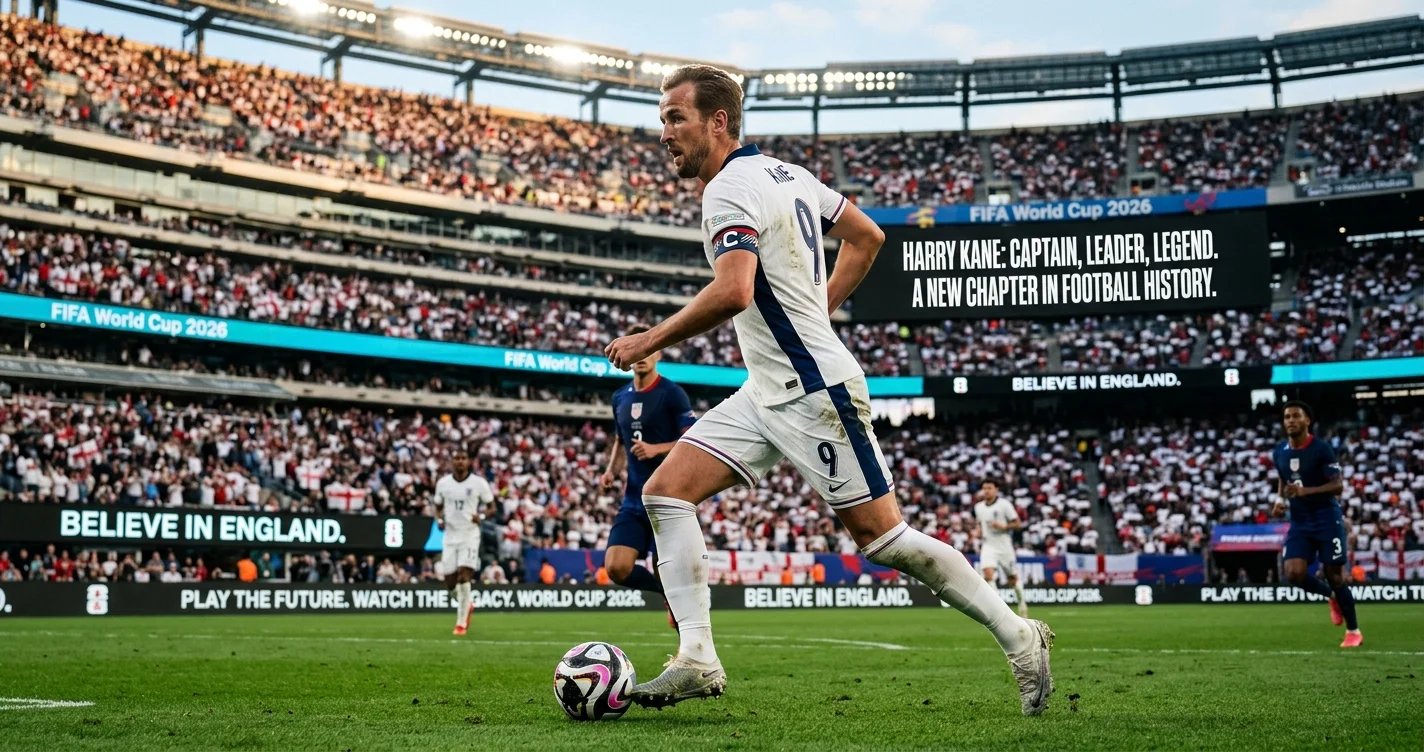
Harry Kane Playing in the World Cup 2026 – It’s the question that’s been circulating through pubs, social media, and sports bars across the United Kingdom ever since Harry Kane’s stunning move to Bayern Munich in 2023. Will the man who has become synonymous with England football our all-time leading international goalscorer still be representing the Three Lions at the 2026 World Cup in North America?
This isn’t just idle speculation. This is genuinely one of the most significant questions facing English football as we look ahead to the next major tournament. Kane isn’t just another player. He’s the captain. He’s the focal point of our attacking play. He’s been the consistent presence through multiple tournaments, multiple managers, and multiple iterations of the England squad.
At thirty-two years old by the time the 2026 World Cup arrives, Kane will be approaching the twilight of his international career. Some might suggest he’s already there. Yet his record remains phenomenal. His mentality is unwavering. His consistency is remarkable. The question isn’t really whether Kane can play – it’s whether he will, and more critically, whether Gareth Southgate or his successor believes he should.
This article isn’t just speculation dressed up as analysis. We’re going to examine the genuine factors that will determine Kane’s World Cup future, look at the possible replacements and alternatives that England has in development, and provide realistic assessment of what we might expect to see from the England team at the 2026 World Cup.
The answer, as you’ll discover, is far more complex than a simple yes or no.
Table of Contents
Understanding the Timeline: When Is the 2026 World Cup and How Old Will Kane Be?
Before we dive into the nuances, let's establish basic facts that matter significantly.
The 2026 FIFA World Cup will take place in the United States, Canada, and Mexico between June and July 2026. This is approximately two-and-a-half years away from the time of writing.
Harry Kane was born on 28 July 1993. This means he will be thirty-two years old at the time of the 2026 World Cup – not quite thirty-three, but certainly in his early thirties by football standards.
Why this matters: Whilst players can absolutely perform at the highest level in their early thirties, this is traditionally considered the age where decline accelerates for most footballers. Kane is hardly "most footballers" – his fitness levels, professionalism, and mentality are exceptional – but age remains a variable that cannot be ignored.
For context, several legendary English strikers have played in World Cups at similar ages:
- Bobby Charlton was thirty-two at the 1970 World Cup
- Gary Lineker was thirty at the 1992 European Championship
- Teddy Sheringham was thirty-three during international play in the late 1990s
So it's entirely possible. But it's not automatic.
Kane's Current Situation: Bayern Munich and International Form
To understand whether Kane will play in 2026, we need to examine his current trajectory – both domestically and internationally.
The Bayern Munich Move: A Watershed Moment
Kane's transfer to Bayern Munich in September 2023 represented the most significant move of his career. After spending his entire professional life at Tottenham Hotspur, he made the controversial decision to leave the Premier League, the league where he'd established himself as one of the world's elite strikers.
The move surprised many. Bayern Munich is a fantastic club with genuine European pedigree, but moving away from the Premier League's intensity, particularly at thirty years old, raised eyebrows. Many questioned whether he was making the right decision for his international career.
What we've seen since:
Kane has adapted remarkably well to the Bundesliga. His record speaks volumes: he's maintained goal-scoring consistency, adapted to a different tactical system, and continued to perform at the highest level. Bayern's style is different from Tottenham's – more possession-based, more patient – but Kane has thrived.
Crucially, his international performances have remained strong. Playing for Bayern hasn't diminished his output for England. In fact, some observers suggest the slightly less demanding schedule of Bundesliga football has actually helped preserve his fitness for international duty.
International Form: Consistency Despite Criticism
Kane's most recent international performances have been subject to intense scrutiny. The 2022 World Cup in Qatar saw him perform admirably despite not scoring as much as expected. Euro 2024 in Germany presented a similar narrative – goals were harder to come by, particularly early in the tournament, yet his all-round play remained valuable.
This is an important distinction. Kane's value to the England team has evolved over his career. He's no longer just about goals. His link-up play, his ability to hold the ball up, his leadership, and his experience have become increasingly valuable alongside his goal-scoring prowess.
Whether that value justifies selection in 2026 – when he'll be thirty-two – is precisely the question we're exploring.
The Case FOR Harry Kane Playing in 2026
Let's examine the genuine, realistic arguments for Kane's inclusion in the 2026 World Cup squad.
Argument 1: Unparalleled Experience and Leadership
Kane has captained England through multiple tournaments. This experience is genuinely invaluable. There's something intangible about having a captain who has been through the emotional rollercoaster of World Cups, European Championships, and knockout matches multiple times.
By 2026, Kane will have captained England through:
- The 2020 European Championship
- The 2022 World Cup in Qatar
- The 2024 European Championship
- Potentially another Euros between now and 2026
This level of tournament experience is rare. Younger players are naturally excited to play in their first World Cup. Kane will approach it with the mindset of someone who genuinely knows what to expect, who understands the mental demands, and who can guide younger teammates through the intensity.
Southgate's successor (assuming someone other than Southgate manages England, which seems likely) will potentially value this leadership significantly.
Argument 2: His Record Is Genuinely Exceptional
Let's put aside emotions and look at numbers. Kane is England's all-time leading international goalscorer with over sixty international goals. No English player has scored more for their country in history.
Even if his goal-scoring rate slows slightly, his historical record provides context. Kane has been consistently excellent for England across more than a decade. This isn't a flash-in-the-pan record. This is sustained excellence.
Moreover, Kane's penalty record is exceptional. At a tournament where penalties are likely to matter, having a proven, clinical penalty taker is genuinely valuable. Kane has converted almost every penalty he's taken for club and country.
Argument 3: No Clear-Cut Successor Has Emerged
This is genuinely significant. Whilst England has talented young strikers in development, there isn't an obvious "next Kane" waiting to take over. Players like Cole Palmer and others are talented, but none have the experience, the proven track record, or the immediate capability to step into Kane's shoes.
Some might argue this is reason enough to continue selecting Kane. If your replacement isn't ready, keeping the proven option makes genuine sense, at least for one more tournament.
Argument 4: World Cup Tournaments Suit Experienced Players
World Cup tournaments, with their intensity and packed schedules, often suit experienced players who know how to manage their energy, pace themselves, and make crucial moments count. Younger players sometimes burn out under the intensity. Kane, at thirty-two, would have the maturity and experience to navigate this environment effectively.
Argument 5: Kane's Professionalism Is Legendary
Kane's dedication to fitness and professionalism is genuinely exceptional. Whilst most players show some physical decline in their early thirties, Kane's commitment to training, recovery, and fitness management is borderline obsessive. If any player can buck age-related decline, Kane might be that player.
The Case AGAINST Harry Kane Playing in 2026
Now let's examine the genuine, realistic arguments against Kane's inclusion.
Argument 1: Age and Physical Decline
Regardless of how professional Kane is, age takes its toll on every player eventually. By 2026, he'll be thirty-two. Even elite athletes experience declining athleticism. His explosive power, his recovery pace, and his ability to operate at full intensity throughout ninety minutes may have diminished.
Whilst Kane's fitness levels are exceptional, this argument isn't about whether he'll be overweight or unfit. It's about whether he'll have the same explosive power, the same recovery speed, and the same physical dominance that has characterised his career.
This is a legitimate concern, particularly given that World Cup football is increasingly demanding physically.
Argument 2: England Has Younger, Hungry Alternatives
England's striker position has genuine depth. Young players like Cole Palmer, Ivan Toney footballer (when fully available), and others represent exciting alternatives. These players come with hunger, energy, and the physical attributes of youth.
From a squad-building perspective, giving opportunities to developing young talent at a World Cup can be more valuable long-term than including an ageing incumbent, even an exceptional one.
Argument 3: Tournament Success Often Requires Fresh Energy
England's Euro 2020 success came partly because Southgate gave opportunities to younger players alongside experienced ones. The balance of experience and youthful energy proved effective.
By 2026, maintaining that balance might mean rotating out Kane in favour of younger strikers who offer different physical attributes.
Argument 4: The Tactical Evolution of International Football
International football is evolving tactically. Teams are increasingly moving toward high-pressing, high-intensity systems that demand constant physical intensity from strikers. Kane's physical profile, even if maintained exceptionally well, might not suit these emerging tactical demands as effectively as younger alternatives.
Argument 5: Symbolism and Squad Renewal
At some point, every player – even legendary ones – must transition out of international football. Continuing to select Kane could potentially stagnate squad development, prevent younger players from receiving crucial tournament experience, and prevent the natural renewal that squads require.
Moreover, there's something to be said for ending on a high note. If Kane retires after 2024 or 2025 with an exceptional international legacy, that's a different narrative than struggling for form at a 2026 tournament.
Examining England's Striking Options: Who Else Is There?
To understand whether Kane will play in 2026, we need to examine what alternatives might exist.
Cole Palmer: The Exciting Young Alternative
Cole Palmer has emerged as one of English football's most exciting young talents. Playing for Chelsea, he's demonstrated exceptional technical ability, intelligence in movement, and genuine goal-scoring prowess.
Palmer represents the future of England's attacking play. He's exactly the type of player England would want developing for 2026 and beyond. The question isn't whether Palmer will be in the Likely England squad for World Cup 2026 – he almost certainly will be. The question is whether he'll be the primary striker or whether Kane's experience will supplement him.
Palmer's profile is actually somewhat different from Kane's. Whilst Kane is a traditional number nine, Palmer operates better in slightly wider positions, cutting inside and using his intelligence. This tactical difference could actually allow both players to coexist in the squad, or it could represent tactical evolution away from the Kane model.
Ivan Toney: The Proven Striker
Ivan Toney footballer has established himself as a genuine striker capable of playing at the highest level. After his suspension, his return to football has been closely monitored. Toney is strong, physical, and brings genuine goal-scoring capability.
Toney is probably in the conversation for the England wc squad announcement, particularly if Kane's role becomes unclear. He's proven at Premier League level and has demonstrated he can score goals consistently.
Other Striking Options
Beyond Palmer and Toney, England has various other options:
- Ollie Watkins – Dynamic, fast, increasingly influential
- Alexander Isak – Though he represents Sweden, Newcastle's form shows his quality
- Phil Foden – Can play as a hybrid striker/winger
- Bukayo Saka – Similarly versatile in attacking positions
The point is: England isn't desperately short of striking options. There are alternatives, and some are developing exceptionally well.
The Manager Factor: Who Will Select England's 2026 Squad?
This is genuinely crucial and often overlooked. The decision about Kane's inclusion won't just depend on Kane – it will depend significantly on who the England manager is at the 2026 World Cup.
Will Gareth Southgate Continue?
As of the time of writing, Gareth Southgate remains England manager. However, speculation about his future is constant. Southgate has suggested he might move on after a major tournament. Whether he manages England at the 2026 World Cup remains genuinely uncertain.
If Southgate continues:
Southgate has shown genuine loyalty to Kane throughout his tenure. He's maintained faith in Kane even when critics questioned his form. Given their established relationship and Southgate's proven belief in Kane's value, continued selection seems likely, assuming Kane's fitness permits.
If Southgate departs:
A new manager brings new perspectives, new priorities, and potentially different views on squad composition. A new manager might be less emotionally invested in Kane's legacy and more focused on introducing fresh ideas and younger players.
The identity of England's next manager could genuinely determine Kane's World Cup future.
What Would Different Managers Likely Do?
A progressive, youth-focused manager might view 2026 as an opportunity to transition toward the next generation, potentially phasing Kane out or using him in a more limited role.
An experienced, pragmatic manager might recognise Kane's value and continue selecting him, seeing his experience as crucial for tournament success.
A tactical innovator might design systems that don't necessarily require a traditional number nine, potentially reducing Kane's relevance.
The managerial appointment will genuinely matter.
Examining the Broader Squad Context: The England Squad at 2026
To understand Kane's role, we need to consider the broader squad composition.
How Will the Squad Evolve Between 2024 and 2026?
The England squad that competed at Euro 2024 will evolve significantly by 2026. Some players will retire. Some will decline. Some young players will break through.
By 2026, we might expect:
- New exciting talents to have broken through
- Some current players to have faded
- The squad to have a different character and composition
- Different tactical demands based on emerging trends
Kane's inclusion will depend partly on how this evolution unfolds. If England's squad develops younger, more physical strikers, Kane's case weakens. If the squad needs experienced, proven players, his case strengthens.
The England wc squad announcement Process
Whenever England's England wc squad announcement happens – likely in May or early June 2026 – the decision about Kane will be made. The manager will have had months to consider, to observe Kane's form, to assess his fitness, and to evaluate whether he fits the squad's tactical requirements.
This announcement will be watched globally. Kane's inclusion or exclusion will generate significant debate. If he's included, it validates his continued relevance. If he's excluded, it marks a genuine transition in English football.
Recent Tournament Performance: What Does The Data Tell Us?
To forecast Kane's 2026 prospects, examining his recent tournament performances is instructive.
Euro 2020 (Played 2021)
Kane played every match, demonstrating exceptional fitness and consistency. His performances were solid, though he didn't dominate the tournament. He scored several crucial goals but also had stretches where his influence was less obvious.
Takeaway: Kane's experience was valuable, but there were questions about whether he'd be England's focal point going forward.
2022 World Cup in Qatar
Kane played, struggled to find his scoring form in group stages, and gradually improved. His overall performance was adequate rather than exceptional. This tournament raised genuine questions about whether his best years were behind him.
Takeaway: Kane could still perform at World Cups, but his dominance had clearly diminished compared to earlier international campaigns.
Euro 2024 in Germany
Kane played, scored important goals, and demonstrated continued value despite being thirty years old. His performance was solid, though again, he wasn't dominant. England progressed far in the tournament, with Kane contributing.
Takeaway: Kane can still perform at tournaments, but he's no longer the undisputed focal point.
The Pattern
The pattern across these tournaments is consistent: Kane remains capable at the highest level, but he's increasingly one component of England's attack rather than the singular focal point. His presence is valuable, but he's not guaranteed to dominate matches.
Physical Demands of the 2026 World Cup: A Unique Challenge
The 2026 World Cup will present particular challenges that bear consideration.
The Three-Nation Format
Unlike traditional World Cups, the 2026 tournament will be hosted across three nations (United States, Canada, Mexico). This means:
- Potential long journeys between venues
- Varied climates and conditions
- Potentially different pitch conditions
- Jet lag management
- Unusual logistical demands
These factors disproportionately affect older players. Younger players typically recover faster from travel demands. Kane's age could become more of a factor in a World Cup with such logistical complexity.
The Expanded Format (48 Teams)
The 2026 World Cup will feature forty-eight teams instead of the traditional thirty-two. This means:
- More group matches (three per team instead of three)
- Different knockout structure
- Potentially more matches for successful teams
- Different rhythm and recovery time
An expanded tournament could be physically demanding in different ways than traditional formats. Managing Kane's minutes and energy over potentially more matches becomes more complex.
Climate Considerations
Playing across North America means potential exposure to different climates – from Caribbean-like conditions in Mexico to Canadian cold. Kane's ability to adapt to varied conditions is another factor, particularly at his age.
Looking at International Precedent: Historical Examples
Looking at how other legendary English strikers have exited international football is informative.
Gary Lineker
Lineker retired from international football at thirty-two, having been involved in the 1992 European Championship. He stepped away whilst still capable, preserving his legacy. Many regard this as elegant, allowing him to exit on his own terms.
Bobby Charlton
Charlton played until thirty-two, including the 1970 World Cup, before retiring. His career gradually wound down rather than ending abruptly.
Wayne Rooney
Rooney played into his early thirties before retiring from international football. His exit was more gradual, with his role diminishing over time.
Implications for Kane
English football history suggests that strikers can continue into their early thirties, but there's often a question about whether continuing serves the player or the team better. Kane could follow various precedents – graceful exit like Lineker, gradual diminishment like Rooney, or continued contribution like Charlton.
The Case for Kane to Bow Out: A Realistic Scenario
Let's examine a realistic scenario where Kane might decide – or be decided – not to play in 2026.
The Narrative of a Perfect Exit
Imagine this scenario: Kane has an excellent 2025 season with Bayern Munich. He helps England achieve something significant (perhaps winning the Euros if another tournament occurs between now and 2026). He then retires at the peak of his powers, having cemented his legacy as England's greatest ever goalscorer.
This narrative has genuine appeal. It's clean, it's dignified, and it allows Kane to exit on his own terms. For a player as self-aware and thoughtful as Kane, this option might actually be attractive.
Moreover, retiring before potential decline allows Kane to control his narrative rather than being phased out. Given how much Kane values legacy and how self-aware he is, this matters.
Making Space for the Next Generation
Retiring from international football would also make space for younger players to develop. The emerging generation – Palmer, Toney, Watkins, and others – need tournament experience. Kane stepping aside, even if he's still capable, accelerates their development.
From England's long-term perspective, this might actually be optimal. World Cup 2026 could be the perfect moment for transition – old guard retiring, new generation taking over.
The Case for Kane to Continue: A Compelling Alternative
Conversely, let's examine why Kane might continue and why England might want him to.
The Bridge-Building Argument
Kane could serve as a bridge between generations. Experienced enough to guide younger players, capable enough to contribute, leadership enough to captain or mentor. This hybrid role – less about dominating, more about enabling – could be genuinely valuable.
In this scenario, Kane plays a reduced role, perhaps coming off the bench in group stages, starting in knockout matches where his experience matters more. He's not the focal point, but his presence is meaningful.
European Precedent
European football offers precedent for this approach. Older strikers often continue for World Cups/Euros in supporting roles. Their experience, even if their physical dominance has diminished, remains valuable.
Kane could potentially follow this model – no longer the undisputed starter, but a valuable squad member whose presence strengthens the team.
The Trophy Argument
If England genuinely believes it can win the 2026 World Cup, having Kane's experience in the squad might matter. World Cup tournaments are won by complete squads, not individual brilliance. Kane's trophy experience could be the marginal difference.
Media Narratives and Pressure: How This Will Play Out
We should also consider how media narratives and pressure will influence this decision.
The Media Will Create Pressure
English media is notoriously intense when discussing England. By 2026, media narratives about Kane's inclusion/exclusion will be powerful and pervasive.
If Kane is excluded: "England abandons its greatest ever scorer" / "Kane's legacy tarnished" / "New generation lacks experience"
If Kane is included: "Kane shows no signs of slowing down" / "Experience wins tournaments" / "Kane's mentorship crucial"
The narrative will be intense either way.
Kane's Own Perspective
Kane is articulate, intelligent, and thoughtful about his career. By 2026, Kane himself will have perspectives on whether he should continue. His own view will matter significantly.
Kane might genuinely believe he can contribute meaningfully. Or he might feel that younger generation deserve the opportunity. His decision will carry weight.
Fan Opinion
English fans are passionate about international football. If Kane is included, some will celebrate; others will call for youth. If he's excluded, some will criticise the decision; others will accept it as necessary.
Fan pressure will exist regardless, but it will be less intense if the decision is clearly communicated and well-reasoned.
The Likely Scenario: A Realistic Prediction
Based on all these factors, what's actually likely to happen?
The Most Probable Outcome
My assessment, based on the evidence examined:
Harry Kane will probably be included in the England squad for the 2026 World Cup, but likely in a reduced role.
Here's the reasoning:
- Age allows it: At thirty-two, Kane won't be ancient by football standards. Whilst decline will have occurred, he'll likely still be capable.
- No clear-cut successor exists: Palmer is exciting but unproven at tournaments. Toney is solid but not exceptional. The depth exists, but no obvious replacement emerges.
- England's squad typically values experience: England's recent squads have balanced youth with experience. Kane fits this profile.
- His leadership matters: Particularly if Southgate continues, Kane's captaincy and leadership will be valued.
- Partial role is optimal: Rather than being the primary striker, Kane probably comes as a squad option, possibly starting against weaker opposition, coming off the bench in knockout matches.
- Tournament experience accumulates: By 2026, the younger generation will have Euro 2024 experience. Kane's World Cup experience becomes less uniquely valuable.
The Alternative Scenario
That said, a realistic alternative exists: Kane retires from international football before 2026.
This would happen if:
- Kane decides he wants to exit on his own terms
- Physical decline accelerates faster than expected
- A new manager prioritises squad renewal
- A major injury occurs
This outcome is absolutely possible, perhaps even 40-50% likely.
The Unlikely Scenario
The least likely outcome is Kane being the primary, undisputed starter at the 2026 World Cup like he has been in recent tournaments. That level of dominance seems unlikely at thirty-two, unless his physical condition truly defies aging.
Examining the Likely England squad for World Cup 2026: Who Else Plays?
To understand Kane's role, we should think about the broader squad composition.
The Attacking Midfield
By 2026, England's attacking midfield will likely feature:
- Phil Foden (assuming continued form)
- Bukayo Saka (likely entering his peak years)
- Jude Bellingham (if his development continues)
- Maddison, Mount, or other creative players (ongoing competition)
This is an area of genuine strength for England. These players will provide creativity and attacking threat regardless of who the striker is.
The Defensive Stability
England's defence has matured significantly. By 2026, core defenders like John Stones, Kyle Walker (if still playing), Declan Rice, and others will likely be established starters. This stability means the team doesn't desperately need the focal point that Kane traditionally provides.
The Central Midfield
Declan Rice and Jude Bellingham are likely to be central to England's midfield by 2026. Both are capable of driving the team forward, meaning the striker role is less isolated.
The Overall Picture
The Likely England squad for World Cup 2026 looks likely to be:
- Defensively solid and experienced
- Possessed of genuine creative midfield talent
- Equipped with multiple attacking options
- Less dependent on a single focal point than in previous eras
Within this squad, Kane could be a valuable component without being essential.
International Comparisons: How Are Other Nations Handling Similar Situations?
Examining how other countries manage aging legendary players provides context.
France's Experience
France continues to select players like Olivier Giroud into their early thirties. Giroud remained valuable for his experience and leadership even when no longer dominating.
Germany's Approach
Germany has historically rotated out aging players more decisively, prioritising youth and physical renewal.
Spain's Model
Spain's transition between generations was gradual, with experienced players like Sergio Ramos continuing longer than expected, providing leadership and stability.
Implications for England
England's approach has historically been somewhere between these models. We're not as draconian as Germany, but not as loyal as France. Kane's inclusion/exclusion will depend on which model England's manager adopts.
The Mental and Psychological Element: Kane's Mindset
Something often overlooked in these discussions is the psychological element. Kane's mindset and desire will genuinely matter.
Kane's Historical Mindset
Kane has demonstrated exceptional mental toughness throughout his career. He's responded to criticism, to injury, to managerial changes, and to pressure with remarkable consistency.
By 2026, Kane will have accumulated significant psychological experience from tournaments. He'll know what to expect. This can be valuable, but it can also breed complacency or reduced hunger.
The Hunger Question
By 2026, Kane will have played in multiple World Cups and Euros. The hunger that drives young players is often diminished by experience. Will Kane still want it intensely enough?
For a player as professional and dedicated as Kane, the answer is likely yes. But it's a genuine question worth considering.
The Legacy Question
Kane is already England's greatest ever goalscorer. He has nothing left to prove in terms of legacy. This freedom could be liberating – allowing him to play freely without pressure – or it could reduce his hunger to achieve.
Injuries and Fitness: The Unpredictable Variable
One element we genuinely cannot predict is Kane's injury situation between now and 2026.
Kane's Injury History
Kane has had significant injuries throughout his career – ankle injuries particularly. He's managed these well and returned stronger, but injuries remain an unpredictable variable.
The Physical Demands of Football
Even for the most professional athletes, injuries accumulate with age. A serious injury in 2025 or early 2026 could genuinely affect Kane's availability.
We Simply Cannot Know
This is where genuine uncertainty exists. We can analyse his form, his age, his competition – but we cannot predict injuries. This element of unpredictability must be acknowledged.
The Financial and Career Aspect: Bayern Munich Considerations
Kane's club situation will also influence his international prospects.
Kane at Bayern Munich
Kane's move to Bayern was significant. He's now at a club where the domestic competition is less intense (though the Champions League is demanding). This might preserve his fitness for international duty.
Club vs. Country Balance
As Kane ages, the balance between club commitments and international duty becomes more important. Younger players are often hungry for both. Older players sometimes prioritise one over the other.
Kane's approach to this balance will matter. If he prioritises Bayern Munich, international football becomes secondary. If he maintains equal commitment to both, his availability and form improves.
Contract and Future Plans
Kane's contract situation at Bayern and any future plans will influence whether he even wants to continue internationally. If he's planning to transition to a different league or role, international football might not be a priority.
Social Media and Fan Pressure: The External Noise
We should also acknowledge the pressure that will exist around this decision.
Social Media Intensity
By 2026, the social media discourse around Kane's inclusion/exclusion will be intense. Every detail will be analysed. Every injury or poor performance will fuel speculation.
Kane and the manager will need to withstand this pressure and make decisions based on football merit rather than external noise.
Fan Expectations
English fans will have strong opinions. Some will demand Kane continues. Others will insist he should retire. This pressure will exist regardless of what's actually best for the team.
Managing the Narrative
Whoever manages England will need to manage this narrative carefully. Whether Kane plays or not, the decision will need clear communication and reasoning.
Expert Opinions and Predictions: What Are Others Saying?
Looking at what football experts and analysts are predicting is instructive.
General Consensus
The general consensus amongst football commentators is:
- Kane will likely be available and potentially included
- His role might be less dominant than in recent tournaments
- Whether he actually plays depends on form and fitness
- No consensus exists on what's actually optimal for England
Most experts avoid definitive predictions, recognising the genuine uncertainty.
Contrasting Views
Some believe Kane should step aside to allow younger players to develop. Others believe his experience is irreplaceable. Still others suggest a hybrid approach where he's squad player rather than starter.
The disagreement reflects genuine uncertainty about what's actually optimal.
Considering Alternative Scenarios: What-Ifs
Let's explore some alternative scenarios and how they'd affect Kane's prospects.
Scenario 1: Kane Has Outstanding Form 2025-2026
If Kane maintains exceptional form at Bayern Munich, plays well in any international matches, and demonstrates no physical decline, his case for inclusion strengthens significantly.
Outcome: Likely included, possibly as starter in some matches.
Scenario 2: Kane's Form Declines Noticeably
If Kane's form deteriorates, if injuries affect him, or if younger strikers perform exceptionally, his case weakens.
Outcome: Possibly excluded or included in very limited role.
Scenario 3: England Struggles at Euro 2024
If England underperforms at Euro 2024 (assuming it occurs before 2026), there might be pressure for squad renewal, potentially affecting Kane.
Outcome: Greater likelihood of exclusion or reduced role.
Scenario 4: New Manager With Different Philosophy
If a new manager arrives with a vision of squad renewal and different tactical ideas, Kane's future changes.
Outcome: Depends entirely on manager's philosophy.
Scenario 5: Kane Decides to Retire
If Kane himself decides international football is finished, the decision becomes moot.
Outcome: Retired, with younger players taking over.
The Sporting Philosophy Question: What Makes Optimal Sense?
Beyond all the variables, there's a broader sporting philosophy question: what's actually best for England?
The Case for Continuation
From a pure sporting perspective, continuing to select Kane makes sense if:
- He's still fit and capable
- No genuinely superior alternative exists
- His experience adds value
- He genuinely wants to play
The Case for Transition
From a pure sporting perspective, transitioning beyond Kane makes sense if:
- Physical decline is evident
- Younger alternatives are ready
- Squad renewal is necessary
- Long-term development requires it
The Nuanced Reality
Most likely, the answer is nuanced. Kane probably belongs in the squad, but possibly in a reduced role that allows him to contribute without being the singular focal point.
This pragmatic middle ground preserves his value whilst enabling younger players to develop.
What Kane Himself Might Want: The Personal Perspective
Perhaps the most important voice in this discussion is Kane's own.
Kane's Professionalism
Kane has consistently shown good judgment about his career. He's made thoughtful decisions about moves, about intensity, about his body. He's shown self-awareness.
By 2026, Kane will have significant say in whether he continues internationally. If he genuinely wants to play and believes he can contribute, he'll likely continue. If he believes his best years are behind him, he might voluntarily retire.
Kane's Legacy Consciousness
Kane is conscious of his legacy. He might prefer to step away on a high note rather than risk diminishing his achievement through poor performance at an older age.
Alternatively, he might view one more World Cup as an opportunity to cement his legend further.
Kane's Competitive Nature
Kane's competitive nature is legendary. He hates not playing, hates sitting on the bench, hates being left out. This intensity might push him to continue longer than is optimal.
Or it might drive him to step away, avoiding the potential of diminished status.
Media Predictions and Speculation: What's Being Said Now?
Examining current media discussion about Kane's future is instructive.
The General Tone
Current media discussion tends to be respectful but speculative. Most commentary acknowledges Kane's exceptional legacy whilst questioning his 2026 prospects.
Few experts definitively predict either inclusion or exclusion. Instead, they recognise genuine uncertainty.
The Evolution of Discussion
Discussion has shifted over time. In 2022-2023, many assumed Kane would continue. By 2024, more voices questioned whether he should.
This evolution reflects both Kane's age and the emergence of alternatives.
The Respectful Tenor
What's notable is that despite questioning his future, media discussion remains respectful. There's acknowledgment that Kane has earned continued consideration through his exceptional career.
This contrasts with how some older players are discussed – with more dismissal and less respect.
The Broader Context: England's World Cup Ambitions
To understand Kane's role, we should consider England's broader World Cup ambitions.
England's 2026 Targets
England will target winning or reaching the final of the 2026 World Cup. This is realistic – England has the talent, the infrastructure, and the experience.
How This Affects Kane
If England genuinely believes it can win, having experienced players like Kane becomes more valuable. Trophy-winning teams often balance youth with experience.
If England is planning transition and rebuilding, younger players become more valuable than experience.
The High-Pressure Environment
World Cup tournaments create intense pressure. Having Kane's experience and composure in this environment provides genuine value, regardless of how many goals he scores.
This might justify his inclusion even if he's not the primary striker.
Conclusion: Is Harry Kane Playing in the World Cup 2026? The Answer
After examining all these factors, what can we conclude?
The Most Likely Outcome
Harry Kane will probably be included in England's 2026 World Cup squad, but likely in a reduced role compared to recent tournaments. Rather than being the undisputed starter, he'll be a squad option who might start against weaker opposition or come on in crucial knockout matches.
This outcome reflects:
- Age viability: Thirty-two isn't too old for football; Kane's professionalism suggests he'll remain capable.
- Lack of clear successor: Palmer and Toney are talented, but none represent an obvious replacement of Kane's calibre.
- England's historical approach: England typically balances experience with youth; Kane fits this model.
- Leadership value: Beyond goals, Kane's captaincy and experience matter.
- Squad depth: Having Kane as an option strengthens the squad without requiring him to be the focal point.
The Alternative Possibility
There's a meaningful chance – perhaps 30-40% – that Kane either retires voluntarily before 2026 or is phased out by a new manager prioritising squad renewal.
This would happen if form declines, if younger alternatives surge ahead, or if Kane himself decides the time is right to step away.
The Unlikely Scenario
The least likely outcome is Kane being the primary, undisputed starter at the 2026 World Cup like he has been recently. That level of central importance seems unlikely at his age.
The Honest Answer
The truth is we genuinely don't know. Kane's inclusion depends on:
- His fitness and form in 2025-2026
- The identity of England's manager
- The development of alternative strikers
- Kane's own preferences and desires
- Unforeseen injuries or circumstances
All of these variables are genuinely uncertain. Multiple realistic outcomes are possible.
Final Thoughts: What We Should Actually Expect
Rather than trying to predict definitively, here's what we should reasonably expect:
Kane will likely be part of England's 2026 World Cup planning. Whether he plays significantly depends on a constellation of variables that we cannot currently predict with confidence.
His legacy is already secure. He's England's all-time leading goalscorer. He's captained the team through multiple tournaments. He's represented his country with honour and distinction.
Whatever role he plays – or doesn't play – in 2026, that legacy is cemented. The question isn't really about his past. It's about his future and how he chooses to spend the final chapter of his international career.
Will it be a starring role? Will it be a supporting part? Will it be a graceful exit beforehand?
Time will tell. But one thing is certain: Harry Kane has earned the right to determine his own future. Whatever he and the England manager decide will be a decision he's earned through his exceptional career.
References and Further Reading
England Squad and Team Information:
Player Information and Statistics:
- Harry Kane Official Profile
- Cole Palmer Statistics and Analysis
- Ivan Toney Footballer Career Overview
World Cup 2026 Information:
- FIFA Official World Cup 2026 Details
- Tournament Format and Schedule Information
- Qualification Overview
Analysis and Discussion:
- Various sports news outlets covering England football
- Expert analysis on player development and squad planning
- Historical precedent for international player retirement